
Long Covid Land Toolbox

Associations between self-reported SARS-CoV-2 infections and the diagnosis of new health conditions

September, 2026
Epidemiologic Study
Associations between the number of self-reported SARS-CoV-2 infections and the diagnosis of new health conditions among adults in Canada, January 2020–June 2023
Background: Preexisting health conditions increase the risk of severe outcomes after SARS-CoV-2 infection. Emerging evidence suggests this relationship may be bi-directional with infection potentially increasing the risk of new health condition diagnoses.
Objective: To examine the association between number of SARS-CoV-2 infections and the subsequent diagnosis of new health conditions, excluding longer-term symptoms after SARS-CoV-2 infection, and to examine associations between infection and vaccination characteristics, including longer-term symptoms, and new diagnoses among the infected.

From HIV to SARS-CoV-2 associated neurological disorder (“HAND” to “SAND”): Viral infection as a “time-bomb“ for the aging brain
2026
Highlights
SARS-CoV-2 infections frequently trigger a delayed, multi-organ syndrome called Long Covid.
A subset of symptoms, including cognitive deficits, reflects cerebral dysfunction.
Both the virus and several proteins that it encodes are culprits, due to direct and indirect disruption of the brain
The impact of SARS-CoV-2 on the brain has some major differences to, yet also some important similarities with, that of HIV.
Like HIV, SARS-CoV-2 associated neurological disorder is on a collision course with aging-induced impairment, leading to mutual aggravation.

Central sensitization in long COVID: Associations with autonomic symptom burden, cerebral hypoperfusion, and neuroinflammation
September 15, 2026

Virus reactivation in acute and long COVID-19
August 05, 2026
Abstract
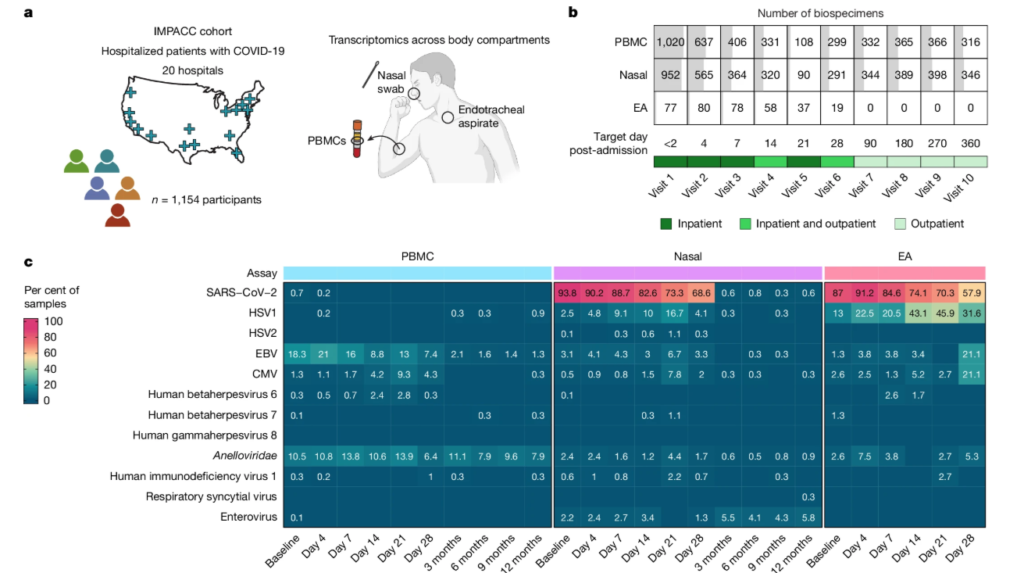
Chronic viral infections are ubiquitous in humans, with individuals carrying multiple viruses that can reactivate during physiological stress, including severe illness1. Notably, SARS-CoV-2 infection has been shown to reactivate chronic viruses such as Epstein–Barr virus and cytomegalovirus, yet the full extent, temporal dynamics and immunological impact of viral reactivation in COVID-19 remain incompletely understood2,3,4,5,6,7. Here, leveraging multi-omic longitudinal data from 1,154 hospitalized patients with COVID-19 from the Immunophenotyping Assessment in a COVID-19 Cohort (IMPACC) study, we reveal significant reactivation of Herpesviridae and Anelloviridae during acute COVID-19, with distinct temporal dynamics for different viruses, and demonstrate that reactivation correlates with disease severity, host immune effects and clinical outcomes. Although our results do not establish causation between virus reactivation and clinical outcomes, we highlight the prevalence of chronic viral reactivation during acute COVID-19 and long COVID. Our findings challenge the prevailing view that chronic viral reactivation is primarily a consequence of immunosuppression, demonstrating that reactivations occur frequently in immunocompetent individuals during severe illness and in association with increased systemic inflammation. Additionally, we demonstrate persistence of viral reactivation in convalescence, and report an association of Anelloviridae with long COVID. This study provides immune, transcriptomic and metabolomic signatures of viral reactivation that could inform future strategies to prognosticate and treat acute COVID-19 and long COVID.

Persistent vision problems after COVID linked to ongoing inflammation, nerve damage

Long-lasting vision problems following mild cases of COVID-19 may stem from persistent inflammation and nerve damage, even as the results of standard eye examinations appear normal, according to a study today in Nature Communications.
Although less well-known than other long-COVID symptoms, ocular symptoms like pain, light sensitivity, blurred vision, and difficulty reading affect up to 31% to 35% of people with the condition, the study authors note. But this abnormal eye behavior can’t be detected by standard methods, making it difficult for patients to get a diagnosis or treatment.
To better understand the eye problems that develop following a COVID-19 infection, researchers led by a team at Linköping University in Sweden examined 100 people who developed ocular symptoms persisting from three months to three years post-infection. The researchers compared their findings with 32 people who had had COVID-19 but didn’t develop eye symptoms.

Multi-omics analysis of long COVID (post-COVID-19 condition) reveals persistent mitochondrial dysfunction, suppressed oxidative phosphorylation, and immune dysregulation
May 20, 2026
Introduction:
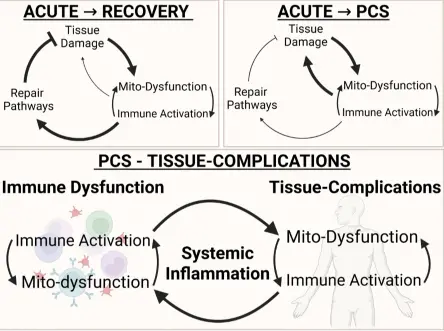
Post-COVID Syndrome (PCS), or long-COVID, is a major public health burden, but its underlying mechanisms remain poorly understood. Because acute SARS-CoV-2 infection induces marked suppression of mitochondrial oxidative phosphorylation (OXPHOS), we investigated whether persistent immunometabolic remodeling is a recurring transcriptional, metabolic, and proteomic feature of PCS.
Results:
Across species and tissues, we observed overlapping signatures of mitochondrial dysfunction, including sustained suppression of OXPHOS, activation of mitochondrial stress responses, and enrichment of inflammatory pathways. Skeletal muscle exhibited the most pronounced and persistent…

Comprehensive Immunophenotyping of Monocytes and Dendritic Cells Suggests Distinct Pathophysiology in Chronic Fatigue Syndrome and Long COVID
May 17, 2026
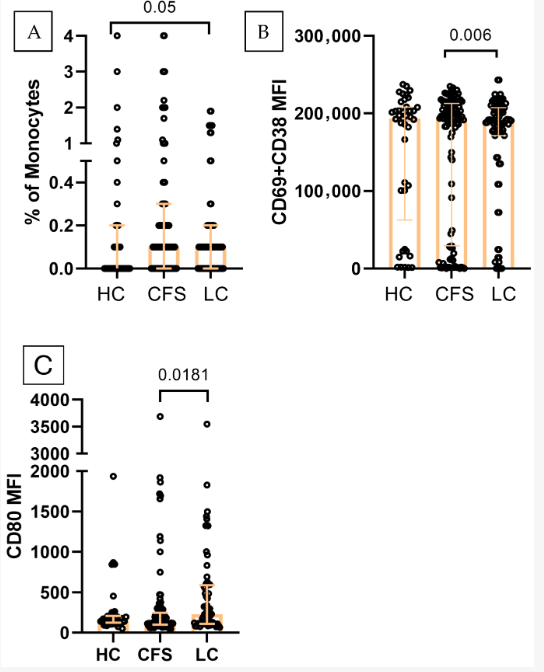
Myalgic encephalomyelitis/chronic fatigue syndrome (ME/CFS) and long Coronavirus Disease 2019 (long COVID) are complex chronic conditions that often follow infectious triggers with overlapping clinical features but poorly defined pathophysiological relationships. This study aimed to identify disease-specific immune signatures through multiparameter immunophenotyping of monocytes, dendritic cells, and T cell subsets. A total of 207 participants were included (ME/CFS: n = 103; long COVID: n = 63; healthy controls: n = 41). Peripheral blood mononuclear cells were analyzed using multiparameter flow cytometry. Statistical analyses included non-parametric testing, age-adjusted Analysis of covariance (ANCOVA), correlation network analysis, and principal component analysis (PCA). Long COVID was characterized by increased M2-like monocyte polarization, elevated CD80 expression across monocyte subsets, expansion of dendritic cells, and reduced expression of activation markers, indicating persistent immune activation with features of immune exhaustion. In contrast, ME/CFS exhibited reduced costimulatory molecule expression, impaired C-C chemokine receptor type 7 (CCR7)-mediated immune cell trafficking, and less coordinated activation patterns, consistent with a state of immune suppression. Correlation network analysis revealed more extensive and integrated immune interactions in long COVID, while PCA identified distinct immunophenotypic components and enabled moderate discrimination between the two conditions. These findings demonstrate that ME/CFS and long COVID are characterized by distinct immune profiles, supporting the concept of divergent immunopathological mechanisms. The identified signatures may contribute to biomarker development and guide targeted therapeutic approaches.
Impact of COVID-19 history on the prevalence of coronary slow flow: a comparative study in unstable angina patients
May 7, 2026
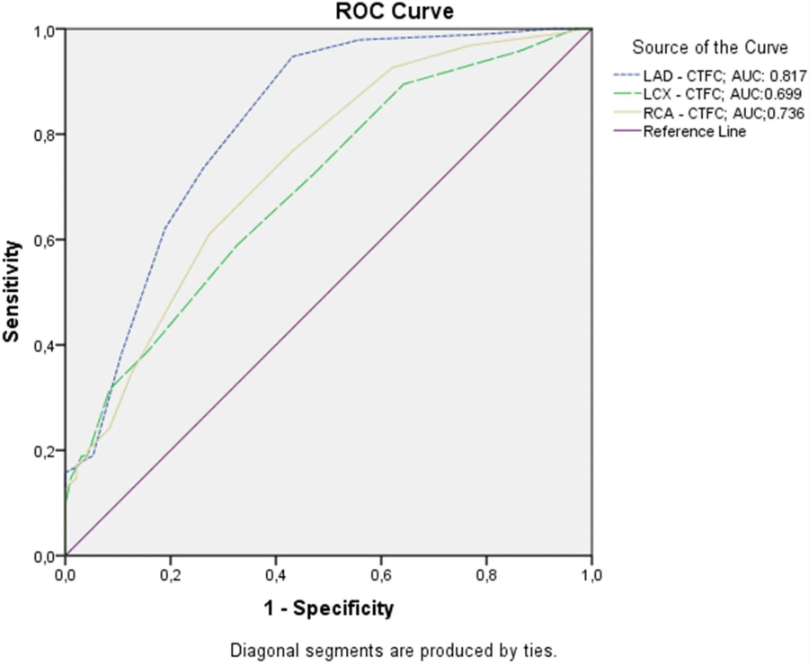
The study included 190 patients presenting with unstable angina (UA) and confirmed normal coronary arteries via invasive angiography. Participants were divided into two age- and sex-matched groups: 95 patients with a history of COVID-19 [COVID (+) UA-NCA] and 95 patients without a prior history of the infection [COVID (–) UA-NCA]. In the study group, COVID-19 was confirmed via RT-PCR and computed tomography. All participants underwent coronary angiography to perform Thrombolysis in Myocardial Infarction (TIMI) frame count (TFC) measurements. CSF was diagnosed in patients with a corrected TFC (CTFC) ≥ 27.
Results:
CSF prevalence was significantly higher in the COVID (+) UA-NCA group than in the COVID (–) UA-NCA group (18.9% vs. 5.3%, p = 0.003). Individual CTFC values for the LAD,
Conclusions:
CSF prevalence is significantly higher in patients with a history of COVID-19, suggesting persistent microvascular impairment.